Showing posts with label Sustainability. Show all posts

Monday, April 18, 2011

#12: Choices But No Options

     Chicago has a lot to offer, and plenty of different types of foods to try. A bunch of world class restaurants. But one of the worse things about Chicago is that it makes it nearly impossible to cook for a family on the budget. Having grown up in Chicago, I have experience this first hand. I grew up in a single parent home with two brothers. I remember the family having to drive half an hour to River Oaks to grocery shopping for the next two weeks. The pilgrimage was made because local grocery was subpar and more expensive compared to those in the suburbs.
Orange represents Fast Foods, Blue is Grocery Stores.
     The Chicago South side is a virtual food desert. Every major street is loaded with fast food restaurants like: McDonalds, Burger King, and the local fast food restaurants. Sit down restaurants are far and few in between.  Most of the big chain grocery stores like Jewels and Dominick’s are located usually where two major arteries meet, which makes since too an urban planner but makes little since to have a grocery locations that far apart. To add further injury, the groceries are usually more expensive then the exact same brands in stores in the suburbs. My family was fortunate enough to have car to travel the distance, but those who rely on transportation on south side (which are a vast amount) don’t have access to those stores and have little option but to go to the overpriced grocery store or buy the underpriced fast food item.
Plenty of Choices.
The desert of grocery on south side is not limited to the price and location but also the quality. There are practically no whole food stores within walking distance or even a manageable bus distance. Whole Foods Stores are mostly located in the north side and require ownership or access to a car to be able to drive to those places. Even then the premium for whole foods is much higher than that of the cheaper less quality food sold at the local chain. Many will settle for the cheaper options because they just don’t have the money to pay the premium on more sustainable food.
Number of Whole Foods: 0.
     So the people are left a variety of choices among fast foods, and expensive yet low-quality groceries. The choice is merely an illusion to disguise the fact that there really isn’t an option to be healthy. Adding a Wal-Mart, which provides more cheap and sub-quality groceries, will not solve the food desert that is south side Chicago. South-siders need access to better food not more food, we have plenty of big chain fast foods, groceries, and convenience stores in the neighbor but little or no quality grocery stores that offer alternatives or that can compete with the chains that choke out quality via cost savings. What the south side needs is complete neighbor transformation which provides access to different options of food rather than the choice between to evils.
The Chicago Food Desert
References:
Personal Experience

Mari Gallagher. 2008. Chicago Food Deserts: examining the impact of food on public health in Chicago. Mari Gallagher Research and Consulting Group.

Monday, April 11, 2011

#11 Smart Growth: Too Little Too Late?

Smart Growth is an urban planning idea to reorganize how cities grow and develop in the future. City sprawl has become a major problem among urban and regional planners for many reasons. One of the major reasons for the problems caused by urban sprawl is that people have the tendency to move further away from work the more they make. This causes several issues such as increased traffic, suburbia where walking or local amenities are miles away and etc. Smart growth seeks to correct that by putting boundaries on city growth, redeveloping the city to be more mixed use, and having other alternatives to driving. But are these ideas too little, and too late. Have we already sprawled too much to make a major impact on the sustainability of the system?
Let’s first mention the problems caused by urban sprawl. The first problem is that urban sprawl creates communities that rely on one mode of transportation, the car. The automobile industry is sort of dependent on how much people depend on cars. Designing cities and town growth so that people don’t have to use cars is ultimately detrimental to industry witch accounted for 33% of the nations carbon dioxide emissions in 2008.  Another problem with urban sprawl is that people still demand necessities like water and energy. In Illinois along there are 11 active nuclear plants with 9 of them within 70 miles of Chicago, and 31 coal plants.  The nuclear and coal plants provide the an equal 48% each of the energy Illinois uses despite the pollution caused by burning coal and the dangers posed by nuclear power. Water also becomes an issue as many counties in Illinois rely on ground water which needs time to recharge.
Map of Nuclear Power Plants in Illinois
But can smart growth solve this problem. Smart growth seeks to limit growth by placing boundaries on city growth and refocus on redeveloping urban areas for mixed residential urban use. Also connect areas with alternatives transportation modes like trains, bus, and bike. These modes of transport reduce the amount of fuel consumption needed for long distant single passenger travel.  One of smart growth most beneficial aspects is that it focuses on the problem in the context of maintaining growth. Cities still grow but they grow with a keener eye towards sustainability, but this is ultimately why smart growth is too meager. Smart growth focuses on the minimum required to maintain growth instead of a shift in values. Smart growth can be just as inefficient as it is today. People will use fewer cars but then people will demand cheaper urban living meaning more energy draining buildings which also use about third of the energy supply. So in a sense we are exchanging one demon for another. Also Smart Growth requires planning from the start in order to have any significant benefits. Most of the criticism of smart growth is that the policies are ineffective or unable to measure the reduction in traffic congestion and fuel emissions.

In order to become more sustainable we need to attack the problem at its source. We need to focus on reducing pollution and restoring the environment so that it can support the planet for centuries to come. Everything else will adapt to those changes. If carbon fuel prices were too high, people would start commuting less, start living closer together, working more efficiently, and do everything smart growth purports to do. In essence the goal of smart growth is a favorable one, but the theory’s means lacks the ability for meaningful change in the way of improving society's sustainability.

References:

Monday, April 4, 2011

#10 – Social Sustainability and the American Dream: Bigger isn’t Better

Social Sustainability is very complex and abstract concept to think about. I can best describe it has the sustainability of the social system of a group or nation. The most obvious movement to push people into a more sustainable social mindset is that of the environmentalist movements. But there have been pushing for the idea of social sustainability such as the civil rights movement, feminism, abolitionist movement, and prohibition movements. These movements seek to change society to suit a more sustainable approach such as reducing crime by reducing poverty and improving equality in civil rights movement. The definition for social sustainability that should be focus on also is the sustainability of our society. Does how we interact with each other, eat, play, and work sustain society indefinitely? If not, what are the reasons and how do we improve those conditions? These are some of the questions that we should be asking ourselves.
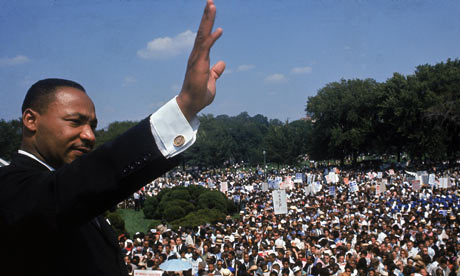
King's American Dream was that racism and prejudice become a thing of the past.
America in particular has been obsessed with the notion that bigger is better. The American dream has been warped from achieving a place where people have peace of mind into the idea that more money means more happiness. This has been in part because of the perception that the more money society makes means the more develop that society becomes (see earlier blogs). The American Dream has been equated with having more rooms in houses, bigger garages to fit bigger cars, owning personal jets, and an increasingly more inefficient shopping list. Suburbia is just one of the many results of an unsustainable social evolution of America. Why improve the living conditions in the city, when instead you can live outside the city in a bigger house and a big yard? Because of this idea, Suburbia was design for cars and not pedestrians, everyone has to drive everywhere, not to mention the water and chemicals used to maintain their lawns.
The American dream has also become defunct has it promotes societal practice of improvement at the detriment of another. Every time someone puts forward concepts to improve the declining middle class majority in America, it is criticized as class warfare. Taking money from the rich and distributing it to the lower classes which is claimed to destroy the American Dream. The current social view of the economy is that a large pie, with each person having a portion of that pie. The current economic system is a game of how big a share of the money can you suck out of the economy. Because the societal goal is to increase the pie every year, the individual goal is to increase the share of that national pie. This means every year someone loses a portion of their pie to satisfy someone else’s American Dream of bigger is better. This practice has push the middle class closer and closer to poverty and more dependent on dirty cheap fuel and cheap pollutant products. You can see the unsustainable practices accelerating in Washington with ideas such as rejection of tax increases on the rich but the cutting of governmental services that mostly benefits middle and lower classes.  Or more directly in industry where Walmart has been criticize by forcing and encourage their underpaid employees to go on government welfare to improve their bottom line instead of using some of their billions of dollars in profits to provide a cheaper health plan.
Walmart's actual logo equates money to happiness
Today an increasingly amount of people are disbelieving the American Dream. It is not surprising that people are being battered by the economy and are losing that piece of mind that they had for so long. If we shifted to a society that values achieving that piece of mind instead of the mantra bigger is better, then better consumption practices will follow, and the  environmental aspects will become important. The American dream hasn’t become out of reach, we have instead forgotten what the American Dream is.


Monday, March 28, 2011

#9 – The Disposable Society

How many trips a day do you make to the trash can? How many times have you not been able to recycle that bottle that you just finished? One of the greatest failing of our economy is that it prefers the disposability and convenience over quality. Just look at the most expensive things on the market today. Everything from laptops to fruit cups all is more expensive than buying a bag of apples and cutting them yourselves. This practice of consumption is the main reason why we have so many environmental issues, and why the health of the average American person is in decline.
Fast Foods are the poster industry for the disposable industry.
Let’s take a look at one of the egregious followers of this consumption trend, fast food restaurants. The first thing to realize about fast food restaurants is that they are not selling food. Places like McDonalds and Burger King are not in the business of creating quality food.  When you are ordering your Big Mac you are not ordering a burger, rather you are ordering consistency and convenience. We all know that you could probably find a better or similar tasting burger elsewhere, but we continue to go to these fast food places mainly because you know what you get and it is relatively convenient. But the price of that convenience is cleverly undersold to the consumer. Fast Food restaurants are the largest purchaser of beef (a natural depleting industry on its own), products are loaded with additives and fat to make them taste better, and are meticulously put together and package into an assembly line burger.  Not to mention the plastic cups, water usage, waste, and all the other natural detriments that occur from calf cradle to the wrapping of the burger. Afterwards we throw away our wrappers and cups to go to the nearest landfill where it will probably be for the next century. The fast food industry is a disposable industry mainly because the product is unimportant only the convenience of the product.
The world is full of land to be used up and then abandon.
Webster defines disposable as an item that is ‘design to be used once and then thrown away.’ There is no life cycle cost of a disposable object; there is only the bottom line of convenience. The product is only as important as it satisfied a minimum requirement; the product is actually the disposability of the product. Just think of other products that are similar to the fast food case: laptops, candy bars, processed foods, pre-prepared foods, cars, buildings, and etc.  A lot of these types of products are traditional disposable. Take a building for instance. A building typically design for a lifespan from anywhere from 20 to 100 years. But little is traditionally though of the life cycle cost of a building, in fact when a building is design and construction the only factors that are considered are the construction costs yet buildings need constant maintenance a steady supply energy, and water. On top of that after the building passed its prime a decision needs to be made to renovate or demolish because no life cycle plans were made for the building. Owners will find it cheaper to demolish the building even though the building materials will just end up in some landfill slowly decomposing. But if that building had a life cycle plan, the materials used in the building could be salvaged more effectively or allow for cheaper renovation.
Recycling gets you more bang for your buck, not convenience.
There are plenty of less disposable systems out there in the world. For example take the glass bottle industry in other countries. Glass bottles are usually used for beers and sodas but are expensive to manufacture. So instead of manufacturing glass bottles, companies set up a cycle to reused returned bottles. After all it is a lot cheaper to clean and refill a glass bottle then it is to create on. The process is less convenient because you have to return your waste, but the product not only has a lower cost, but a lower environmental impact. People are no longer buying convenience but the actual product. You don’t need the glass bottle but you need what’s in it. In this type of process the waste is reduce significantly because the life cycle cost of the bottle is consider and the bottle is used to its fullest potential. Disposability and convenience is not important but the efficiency of the system is now the deciding factor.
Convenience will ultimately lead into a dead end.
The American society is dependent on disposability and convenience. The easier and timelier products always become the dominant product in the market place. Cars were more convenient then trains and passenger services, plastic bottles are cheaper to produce then glass bottles, corn syrup is cheaper then sugar. These consumer shifts have resulted in a less safe, less healthy environment has well as a less healthy society.
The Disposable Trash Can. What will they think up next?


Monday, March 14, 2011

#8 - The Natural Capital Crisis

Many of the economics of today depend on questions of 'how much wealth do we have'. The economy of a nation is determined by how much it produces or how many customers they serve. The metrics comes down to estimating the value in monetary growth; “how much have we made the past year?” The purpose is to measure the increase in value of our country and to take pride in false since of economic security. The reality of the matter is that we are losing value rather than gaining value. There are valuable resources being destroyed in order to provide the next fad technology, or extravagant lifestyles that are only allowed due to the perceived economic wealth of the country. Economics is essentially limited by physics. Matter can neither be created or destroyed. So if the economy is growing, it is growing at the expense of something else. Natural capital is the energy that fuels economic growth, and the fact that the world doesn't put a value on our natural capital is leading to crisis.
Mountain Top Remmoval For Coal Stripping the Land Bare
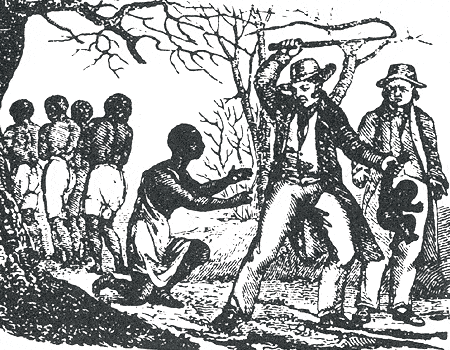
Ignoring the true value of the nation has been done before throughout its history. One can put forward that slavery was a crisis of human capital, not just a moral or sovereignty challenge. Lincoln didn’t argue against the morals of slavery, but the economics of slavery. If you could get a slave to complete a hard labor task, there would be no reason to invest in more efficient machine or system to replace the laborer. In the system of slavery, the labor is free and inherited like property. Why buy an expensive machine to farm tobacco, when we have free labor to do the same work? The system was ultimately unsustainable for the simple fact that because there was no value in the human capitol there would be no value in investing in it. For the exception of the slaves brought up to do more administrative task, slaves were not educated by their masters and were only giving enough food and clothing to efficiently complete the labor required of them.

The Crisis of Human Capital in the U.S.
Now if this is starting to sound familiar too you, then maybe not all hope is loss. Right now we have reached a new false stability in our economic system. It is the crisis of natural capital. Just look at the energy industry and you can see the parallels of abuse of the environment similar to how the system abused the slaves. Things such as trees, mountains, streams, and ground water cease to be describing in the romantic sense but in such grim terms as factors of production, sites, and raw materials. Nature is full of things to be used up and toss to the nearest landfill or storage facility.  There is no planning for how to take care of those resources or rather the water used as coolant will recharge, or the heat gained by the waste water won’t kill off plant and wildlife. These things are not considered because the world decapitalizes the value of nature in preference to that of financial capital (a societal construct to place a unifying value on things).
Natural Slavery
Look at some of the problems arising from not valuing our capital; nuclear waste, acid rain, smog, lead poisoning, asbestos,  CFCs, greenhouse gas emissions, drab bleak suburbia, deforestation, mountain blasting, asthma from dirty air, and the list can go on forever. To draw a parallel to the crisis of human capital, what were the various negative impacts of that period: oppression, unequal rights, illiteracy, racism, discrimination, poverty, health concerns, violence, and etc. The effects of slavery are still being experience today, and the effects of the natural capital crisis will definitely be similar in scope especially if the crisis isn’t solved. 
     A quick glance at current events, such as BP Gulf Oil Spill or Arkansas Fracking Earthquakes, reveal that problems are beginning to pile up. The problems of devaluing our natural resources in favor of economic growth from decades past are just now beginning to take hold.  The system has to allow for a change in how we value things and it can’t just be monetary. There is value in natural resources outside of being a factor of production mainly because we are part the environmental system. The same resources destroyed in the production of coal, is used to produce oxygen, provide a sense of wellbeing. The same waste water released into the environment, eventually leads back to us in drinking water. We should really start making the tough decision to tackle the natural capital crisis before it becomes another human capital crisis.
"We should really start making the tough decision to tackle the natural capital crisis before it becomes another human capital crisis."


Monday, March 7, 2011

#7 – The True Cost

The Gross National Product (GNP) has been used for decades to measure the growth of the economy and the improvement of the people who work, produce, and buy in that economy. But the GNP indicator only provides the “market” value of the services and products produced by labor and services. GNP only measure economic growth and nothing else. GNP doesn’t measure how technological advance, the improvements in poverty, economic distribution, economic justice, resource depletion, environmental degradation, nor does it take into account the negative effects of the economic growth. Economists make a basic assumption when using GNP, that economic growth is the only way to continue prosperity. Why economist have a fetish for only measuring one part of the economic system to draw such a broad conclusion is unfathomable?

To illustrate the point of how absorbed the use of GNP to measure prosperity, would be to take a completely fictional futuristic T.V. show, Star Trek. How would economist measure the prosperity of the universe in which Star Trek exist? From the apparent technological advances in science, information technology, travel, and quality of life, the planet Earth hasn’t been more prosperous despite the occasional alien attack. The economists today would rate the entire planet has a third world country. Why; because in that Universe, there is no gross national product. There is no “market” value in production. In fact in the Universe of Star Trek money has been abolished completely, because technology has advance to a state where economic growth is pointless, and only would be a detriment to society. Economic growth does not mean prosperity, or economic stability. Economic growth only means what it means, that the economy sold more than last year.   
"The economists today would rate the entire planet has a third world country."
Economic growth also has that hidden cost that nobody mentions for fear of being laugh at. Economic growth has several side effects such as, environmental disasters, overloading the environmental systems, social disorder, and economic disparity. The GNP fetish has been so intertwine in the conventional wisdom that any attempt to attach a social, or public cost to a product is considered heresy. The economic theory has failed and the economists haven’t realized it. The model is too simple and economists in their quest to simplify and understand the abstract invisible hand have forgotten that the economy doesn’t measure wealth or prosperity. It measures only part of the environment and a new theory needs to prevail in order to adjust the model to fit the needs of the day.
"The model is too simple and economists in their quest to simplify and understand the abstract invisible hand have forgotten that the economy doesn’t measure wealth or prosperity"
GNP after all is a number; it is the people that put value into that number. GNP can be more meaningful if it reflected the true cost of production. What if GNP not only took into account production but also the results of that production? How would the growth trend look then when the cost of pollution is added?  How would that trend look when it also represents the displacement of communities due to shifting industries? How would the growth be affected when looking at the wars caused by the increase in the “market” value of food? GNP is just a number and has no social or environmental constraints. Using GNP has anything but the amount of goods produce, is unsustainable.

Monday, February 28, 2011

#6 – Water Park Conundrum

Imagine you’re a kid again and your parents are taking you on the many summer vacation to a local water park. Put on your bathing shorts and get into the car or SUV and drive about two hours until you reach the destination. You enter the park and treated to a variety of smells and the sounds of running fresh clean water everywhere. You can wait to get on the first ride. You see a giant water slide in the distance and run to get in line. You spend thirty minutes in that line and it’s finally your turn. You climb the stairs you get to the top and see the blue vista in front of you. You hop on the slide and let gravity take you down the slide until you reach the bottom and expecting fresh cool water you get buried in salty sand. The 70.6 percent of the Earth crust is covered in water, but only 1.6% of that is fresh water.  If the water parks we all remember as a child reflected the reality of fresh water scarcity the planet has, it would it be rather a desert park. There would be no giant water slides, large pool areas, boat rides, spray fountains, or other wasteful water attractions that are a pleasure to see.

People don’t really see water has a issue in the United States because it is cheap, and is accessible practically everywhere, which is why it has become a problem. Poorly planned water systems are draining ecosystems of water that takes centuries to recharge and have vast impacts on the environment. Urbanizing the desert has led to a crisis in western states that are continuously draining there underground aquifers. Instead of adjusting to the environment that city sprung, the city planners instead conformed to the American tradition of surburbia, watered lawns, and water parks. Cities such as Las Vegas are after all located in the dessert, and some strict rules for water usage should be common place for that type of environment. But instead of adopting water efficient technologies, ordinances, and other means to replenish and conserve the water used by the city’s residents and businesses, instead used as much as they possible could thinking the wells would last forever. If the city ran out of water, they would have only themselves to blame.
Considering the previous case, imagine now that the water park instead traveled to where you live. Changing ecosystems and moving rivers have become common place when convenient. But imagine if we move a river and unintended consequence was that we have created a man made flood plain right at you from door. People are running motor boats down your street. And when the water finally subsides, there is the damage, the mold, and the destroyed economy along with it. There would have never been a flood there if they hadn’t move that river and created a flood plain. But who can you blame, the river was in the way, it was too much water. Another example of how we don’t build within our means when it comes to the environment. Now imagine that the river was where a city or town dumped its sewage instead of cleaning the sewage to “acceptable” levels and putting back into the ecosystem. Not only would the environment be polluted but your home as well.

Stephen Mally - New York Times

To put it simply the Water Park Conundrum is a problem of how we change the environment to suit are needs are unsustainable to the development of our society. The water park serves no purpose if there isn’t any water and a water deserted city serves no people. An inconvenient water park isn’t fun and has well as a house underwater. The problem can be solve if we are willing to change how we use water every day.
References
 http://science.howstuffworks.com/environmental/earth/geophysics/question157.htm

Tuesday, February 22, 2011

#5 Our Land, Our Values - Social Sustainability

 “You realized that in the era before the automobile, these houses existed in a completely different relationship with the road. The houses honored the road because the road was honoring” (Kuntsler, The Geography of Nowhere, p. 130). The ways we use are land reflects the values of society. I am pretty sure when thing of houses you can imagine the typical generic triangle shape, with a box for garage right next to it or a driveway. What do houses tell us about what we value? Sustainability is not just environmental issue but also a social one. Van Jones in his TED lecture saw that the reason why people have been so wasteful is because of the idea of disposability. That we can use something until it is waste and simply throw it away and move on to better more disposable item. The landfills are proof of our value in disposability. But houses are more personal and tell us what we really value. The modern house is very materialistic. Houses showcase our excess, our three expensive cars, our expensive drapes and holiday decoration. The Department of Transportation in their 2011 Pocket Guide to Transportation found that 57.4% of households own 2 or more cars.  How many times have we heard story of angry neighbors you complain about other people unmaintained lawns? They say that house makes all of us look bad. The modern day house shows us to be selfish, and materialistic.

Suburbia
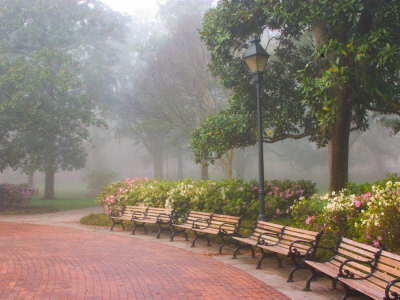
There is no easy way to change how people live. Changing the way people can be has impossible as changing the tides. But a way to be socially sustainable is to change the way re build neighborhoods. Instead of having houses face streets, how about houses facing other houses. Move the sidewalks away from the streets place them straight in the middle. Build the garages in the backs of the house so they have access to the streets. This solves alley problem Kuntsler mentions his book, The Geography of Nowhere and the simple design puts value on the community rather than the material goods. The lines between houses will be blur because private residence would blend seamlessly with the public sidewalk. It also allows for more of a park setting. Can you imagine walking out your front door right into a public park filled with benches trees? People will be more incentivize to get out and meet people and actually walk for the sake of walking. It would be a great deal better then peaking your window and seeing some raggedy building, or your neighbor’s gas guzzler, or the 100 cars that drive down the street every day. More importantly the neighborhood would be socially more sustainable. People would have interest in the well being of others. Instead of disliking the person you has maintain his lawn, you would want to know more about why he hasn’t cut his lawn. The houses would honor the community because the people were worth honoring.
Imagine stepping out your front door to this everyday.

Sunday, February 13, 2011

#4 Driving A Greener Future

Public Transport

Public Transportation is one of the most fuel efficient ways to travel today. With all the talk of hybrids and fuel efficient cars, trains and bus systems have been providing sustainable transports for decades.  According to David MacKay’s “Sustainable Energy - Without the Hot Air”, cars on average are 33 miles/ gallon witch translate to 80 kWh/ 100passenger-km. He estimates that trains if full to capacity can reach an efficiency of 3 – 4.4 kWh/ 100p-km, buses can reach 6 kWh/ 100p-km. Public transports get there benefit in carrying more passengers for the same energy usage.  Trains are particular a plus because the technology can be directly powered by alternative energy sources.


But although MacKay notes the clear energy efficiency of these forms of public transport, there is a logistical and economic problems dealing with these systems.  Trains are slow to adopt new technology even if the technology is proven just because of the nature of the system. It would take 30 or more years to replace fuel based locomotives and heavy investment infrastructure converting rails so that they operate on electrical energy. This is evident by trains today still using air based braking system despite electric braking systems   being faster, safer, and more efficient. Another issue is he assumes full ridership which is never the case for most public transport system. There will always be times when people will not be using the public busses and trains. When these systems are under capacity, those systems operate inefficiently and sometimes more energy wasteful then cars. These public transport systems, to ultimately achieve their maximum efficiency, require a complete government and more importantly public shift in funding and utilizing public transport.


Private Transport

David Mackay would suggest that the electric car is the most promising personal transport vehicle in providing a solution to the environmental problems.  Electric cars have a lower manufacturing cost, very good energy economy with a 21 kWh/ p-100kh, and have the benefit of being able to be directly powered by renewable resources. Some of the drawbacks are that electric cars have a maximum driving distance of 100 km and the battery life is currently 10 years or less. But changes in electric car infrastructure and improvements in battery technology can potentially lengthen the lifespan and travel distance of electric cars.

The Tesla Roadster

Technology - China's Pearl

Model of Pearl River Tower.
     Net Zero Energy Buildings are considered the platinum standard of sustainable building. The principle is to design and build edifices that produce there own energy from renewable sources on site. This includes the use of energy management systems, solar panels, and efficient heating systems. That is why the Pearl River Tower in Guangzhou, China is turning some heads.

     This 71 story supertall building relies on not only photo-voltaic cells, and solar panels but also has several wind turbines to power this green tower. The tower also utilizes energy efficient elements such as double skin curtain wall, chilled ceiling system, under floor ventilation air, and daylight harvesting. The building was design and built by world renown Skidmore, Owings, and Merrill and architect Gordon Gills

Rewards:
2010 • Chicago Athenaeum • Green Good Design Award
2008 • Spark Awards • Green, Carbon-Lowering & Environmental Category: Gold Award


Links: 

Monday, February 7, 2011

#3 Carbon Tax

Global Climate Change is a problem that the world has to start seriously addressing in the coming years. The IPCC stated in its 2007 Summary to Policymakers that, “Carbon dioxide is the most important anthropogenic greenhouse gas. The global atmospheric concentration of carbon dioxide has increased from a pre-industrial value of about 280 ppm3 to 379 ppm3 in 2005. The atmospheric concentration of carbon dioxide in 2005 exceeds by far the natural range over the last 650,000 years.” The facts of the debate are in and human caused carbon dioxide appears to be the major contributor to global warming and the resulting climate change. Because of these facts there should policies put in place to reflect the realities of the world we live in today. There must be some sort of Carbon Tax that translates the environmental cost of carbon emissions to an economic one.

Taxing carbon does several things that will tackle the problem of carbon emissions. The tax will decentivize carbon based fuels and processes that produce the undesired emissions. Companies will look to alternative means to get the energy they need to continue manufacturing. The tax will also raise the price of goods that use the most carbon to be produced. From gas guzzling cars to inefficient coal burning energy plants, there will be a public incentive to find goods and services more energy efficient and cleaner. But there are drawbacks to a carbon tax that must be address. The construction industry will take a heavy hit from the carbon tax. Iron/ Steel Production and Cement Manufacture rank as the 3rd and 4th highest sources of carbon dioxide emissions (EPA). A nationwide  increase in construction cost due to increase in construction could potentially lead to a painful blow to the construction industry which rely heavy on concrete and steel for building materials. Another factor that also needs to be considered should be that low income households have less disposable income and already don’t have the means to buy cleaner products.
Figure 1 2006 Sources of CO2 Emissions. This figure illustrates sources of CO2 emissions for 2006. Fossil fuel combustion is by far the largest source of CO2 emissions, From IPCC

Many of these issues can be solve by the collected revenues from the tax. The tax must be used to subsidize low income household with an overall tax credit. This credit will allow low income earners to still get the good and services they need and still avoid the higher carbon products. Some of the revenue of the tax should also use to subsidize carbon neutral and sustainable technologies and fund sustainable construction projects to help lift the markets harmed by the tax.  The overall goal is to force heavy polluters to change energy sources not to punish consumers.
 Carbon Tax enforcement is also difficult to enforce because it requires infrastructure to monitor and assess carbon emissions from practically every industry. One of the ways that governments have approach it is to regulate the carbon emission like volatile emissions. Other countries adopt a Cap and Trade type system that gradually raises the cost of carbon emissions overtime. Each of the systems used have positives and drawbacks associated with them.
A Carbon Tax will not solve the climate crises but it will be step towards addressing the problem. If design and implemented intelligently the system will behave positively and begin to change course. Other factors still need to be change such as the behaviors of everyday people but there needs to be an economic change to inform the social change.


Bibliography
IPCC (2007). Summary for Policymakers. In Climate Change 2007: The Physical Science Basis. Contribution of Working Group 1 to the Fourth Assessment Report of the Intergovernmental Panel on Climate Change [Solomon, S., D. Qin, M. Manning, Z. Chen, M. Marquis, K.B. Averyt, M. Tignor, and H. L. Miller (eds.)]. Cambridge University Press, Cambridge, United Kingdom and New York. NY, USA. Retrieved February 7, 2011 from http://www.urban.illinois.edu/courses/up446/sp11/Reader/2_IPCC%2007%20Policy%20Document.pdf
U.S. Environmental Protection Agency (2006). Human-Related Sources and Sinks of Carbon Dioxide. Received from http://www.epa.gov/climatechange/emissions/co2_human.html

Thursday, January 27, 2011

Temperature Effects on Infrastructure

Sun Kink = Rail failure the occurs on hot days. Rapid expansion of steel leads to a sudden misalignment of the rails which if undetected leads to derailments.


Friday, January 21, 2011

0# INTRODUCTION

Nissan Leaf Logo
Welcome to the Engineering Sustainability blog. This blog will seek to address the issues of sustainability in urban planning and future developments. Sustainability is a complex idea and often has several different definitions and meanings. The best way to describes Sustainability is “to meet the needs of the now without sacrificing the needs of the future”. There are three major areas of sustainability which include Social, Economic, and Environmental. All of them are equally important and have major impact on our daily lives.

Australia Flood
                Global Climate Change affects us all from the local farmer who is experiencing an abnormal drought, or the family whose house was destroyed do to an unprecedented rainstorm. Rather you believe the cause is man-made or not is irrelevant, if action is not taken the next disaster could be your business, your home, or your welfare. For this reason, sustainability is becoming increasingly imperative especially in the designs of new technologies and processes. We have to engineer the technologies today to help us ensure comfortable life and mitigate disasters so that future generations can still enjoy the same air we breathe today.


Images: